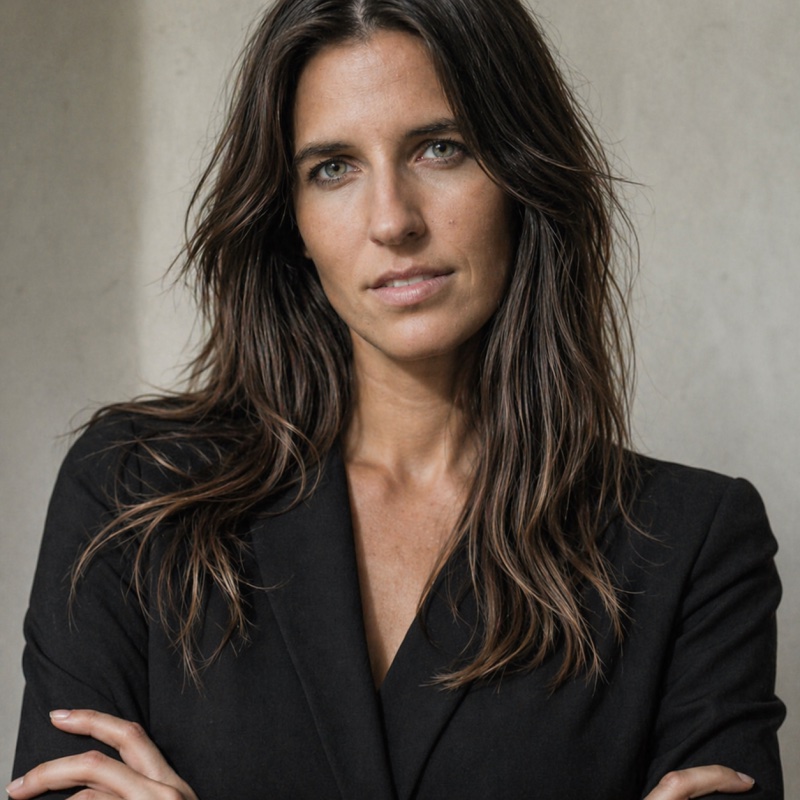
Originally sent as "how I ended up here" to the From operator to owner newsletter.
Looking at my newsletter stats last week, I realised more than 700 people now read this. It started almost casually, as a place to dump thoughts and unfinished reflections. But if you're going to sit in my inbox every week, it's time I properly introduce myself.
The first time I bet on myself
I've always had a stubborn ambition. When I was studying in the US, I used to say, with absolute conviction, that I would get a job at Google. No "maybe", no plan B.
Because I believed it so strongly, I behaved accordingly. I didn't just apply. I sent business plans, websites, unsolicited product ideas, and long messages to recruiters who had no reason to care. Eventually someone replied: "We're not hiring internationals for entry roles in the US. Try the UK." So I did. Not even six months after graduating, I had the job I'd been chasing.
First lesson: if you want something badly enough, you cannot quietly hope the world notices you. You have to make yourself impossible to ignore.
When ambition changes shape
After almost three years at Google, something shifted. I didn't want to spend the next decade chasing titles inside a giant corporation. I wanted to build things.
So I started a company. Misk: a social app for restaurant recommendations from people you actually trusted. We raised from a New York fund, moved there for six months, lived in a tiny room with no kitchen, worked like maniacs and believed we were building the next big thing. After three years of intense work, it ended. Great traction, terrible business model. We shut it down.
Second lesson: a business without a real monetisation path is not a business. If you're going to start something, have a sustainable business model from day one.
A dream job that turned into something else
After Misk, I joined Too Good To Go as General Manager for Portugal. Employee number one in my market. Portugal took off. Then they offered me Spain, then the UK. At some point I had a team of 200+ people across three markets. It felt like running multiple startups at once, with a strong company behind me.
During my first maternity leave, I started another project with my sister: Favorite People, an e-commerce clothing brand. She led most of it while I went back to work full-time, and it became an anchor for our family.
As Too Good To Go kept expanding, the logistics got harder: headquarters in Denmark, teams across countries, constant flying, a baby at home. And I confronted something I never had before: ambition is allowed to change. We talk about pushing harder and going bigger, but almost nobody talks about the moment your goals shift because life shifts.
The detour that taught me more than any success
I left and took a fully remote Director role at a crypto company. Great pay, flexible, a real leadership role. In reality, the opposite. I didn't connect with the industry or the leadership, and I didn't align with the culture. Six months in, pregnant with my second child, I quit, even after my boss suggested I stay low and take the maternity pay.
Third lesson: doing the right thing is rarely the most comfortable option, but it's always the most freeing.
A second chance to reinvent myself
Not even two months later, I became Global Head of Growth at a B2B SaaS company. They knew I was pregnant and hired me anyway. What surprised me was how much I liked the business itself: in B2B the strategy is sharper and the leverage higher. If you asked me today whether I'd start a B2B or B2C business, I wouldn't hesitate.
After two and a half years, the itch came back. My biggest fear, I realised, isn't failure or risk. It's looking back one day and seeing I didn't go as far as I could have.
Around the same time, almost every conversation with friends and former colleagues in tech led to the same frustration: "I'm helping companies grow to millions, but I don't know how to build something for myself." "I want more control over my schedule." "I want something of my own."
So I left corporate life and restarted my entrepreneurial journey. The difference this time was that I knew exactly what I didn't want: the VC rat race, big teams, big burn, big board meetings. I wanted a portfolio of businesses that would give me options, ownership, and freedom.
What my life looks like now
I run several revenue streams, all intentionally designed: Madgrowth (advisory and products for leaders in tech who want to build a business of their own), advisory for startups on go-to-market, company programs and workshops, speaking, investing, and Favorite People, which my sister scales faster every year.
People ask how I manage it with two small kids and a husband who's away most of the month. It's chaotic. It requires trade-offs. But it's the right kind of hard: the kind that leads somewhere, not in circles.
The lessons
It has never been easier than right now to build a business, a product, or a brand from scratch. You will sacrifice the "Netflix couch" version of your evenings. Kids don't limit you; they sharpen your focus, because time becomes the most valuable currency you have.
Freedom is a skill. Confidence is a skill. Entrepreneurship is a skill. The combination of the three is life-changing in a way no job title can replicate.
If you're reading this and thinking "I want this, but I don't know where to start", take the Builder Diagnostic. You don't need a perfect plan. Sometimes you need one conversation that points you in the right direction.
Get the next issue
From operator to owner goes out every Thursday: a 3-minute read on building a business after a tech career, with the experiments, the numbers and the mistakes.